
Fine Art Photographer Alan Sislen Talks About His 10th Solo Exhibit at Multiple Exposures Gallery
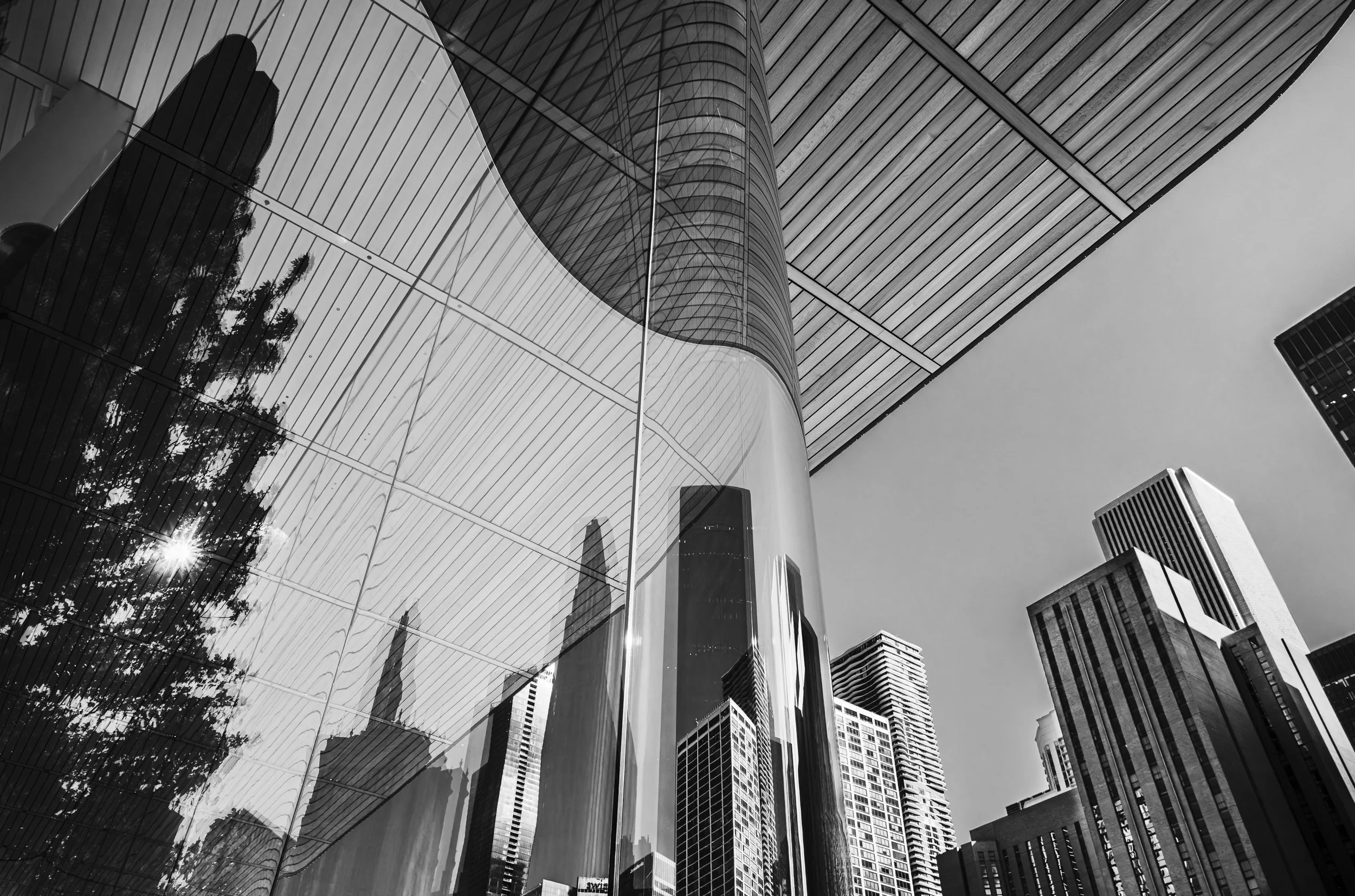
When I began at MEG in 2005, most of my work focused on landscape photography, heavily influenced by Ansel Adams and Charlie Waite. For the past decade, my attention has been drawn to black and white photography, with conventional architectural photography occasionally creeping in.
This new exhibition represents a dramatic departure. One of my mantras has been simplicity. From composition in the camera’s viewfinder and continuing through processing and printing, my approach has always been the same: simplify, simplify, simplify.
A number of years ago, after taking some unplanned photographs that did not fit my keep it simple approach, I created a collection I first called “Confusion.” Initially, they were images I simply stumbled upon, but over time, while out shooting I found myself seeking images that were more complicated and not easily understood. The collection grew and grew. This unplanned and unexpected journey has now become AMBIGUITY.
Generally, I’ve believed photographs shouldn’t have to be explained. Let every viewer decide for themselves what they see, how they interpret it, and if they are moved. Whether a photograph or even an entire exhibit is compelling is ultimately up to the viewer, not the photographer.
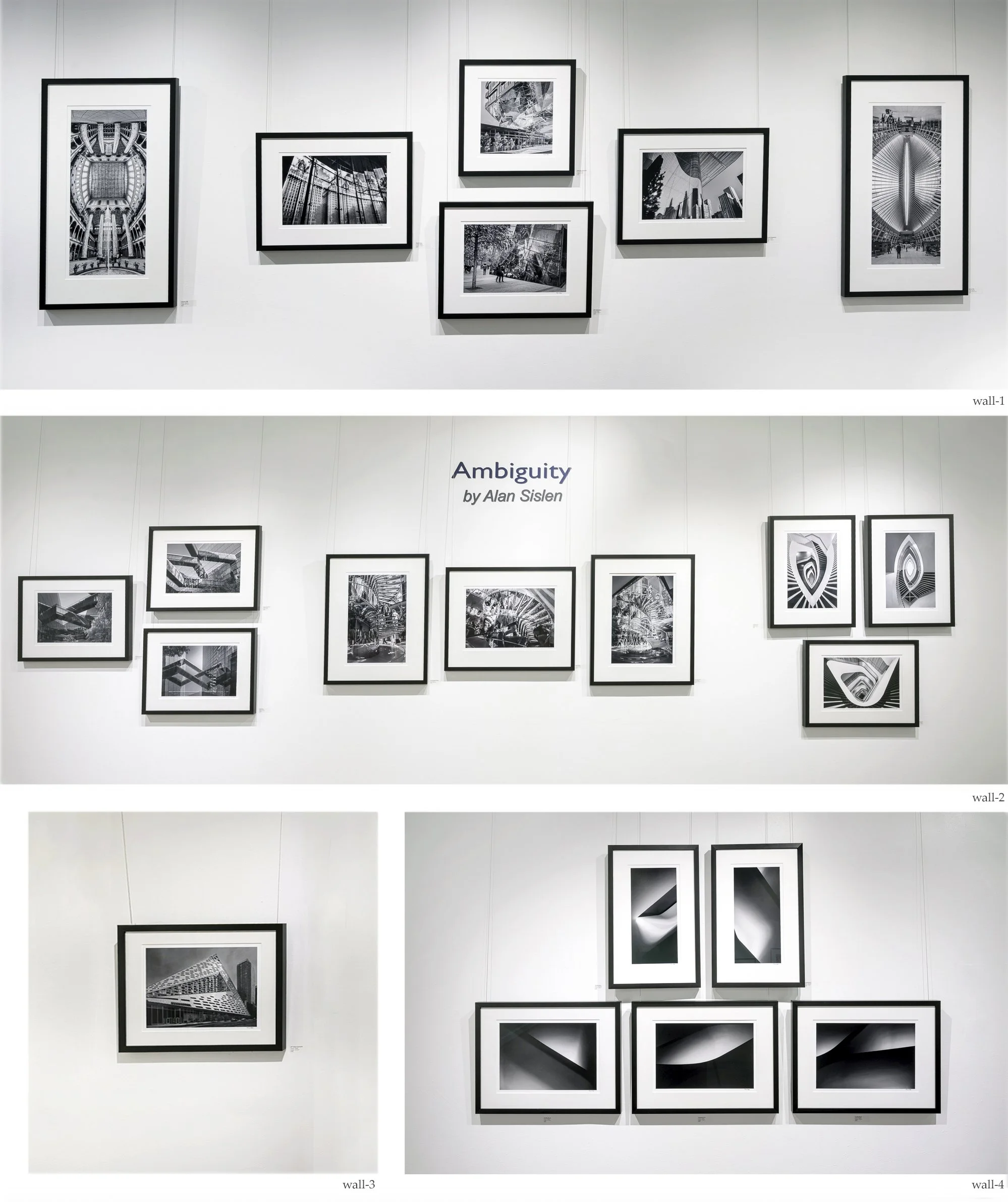
For this exhibit, I have deliberately divided the photographs into 5 distinct groupings, plus one lone selection:
Wall 1: On the far left wall, two vertical panoramas bookend a group of photographs that are intended to confuse the viewer. Reflections accentuate the complexity of the subject matter. With time, hopefully, the narrative of each photograph becomes less confusing. The panoramas on each end are 180 degrees shots. The top and the bottom of each photograph are the opposite walls. It may take the viewer a few moments to figure out what they’re looking at.
Wall 2: On the center wall, there are 3 groupings of photographs:
Grouping 1 presents unusual perspectives and reflected elements of buildings, windows and connecting overhead walkways.
Grouping 2, in the center of the wall, contains three larger photographs featuring people on a confusing stairway with an outdoor entrance above ground and a retail setting below ground.
An unseen elevator is in the center of the cylindrical structure in the middle of the stairway.
Grouping 3 shows two different stairways. The top two photographs are the same stairway, but one looks straight down to the lowest level of the building, and the other looks straight up from the lowest level to an outside skylight. In the final stairway, a complex interior structure fills the frame, with the view looking down at a lower level of the building interior with radiating railings and rails. It takes some effort to settle into the reality of the scene.
Wall 3: On the little corner wall is a single photograph of an Escher-like apartment building in NYC. Look carefully at the actual apartments with balconies and at the outer shell of the building.
Wall 4: The final wall of abstracted images is meant to let the viewer come from the most complex and confusing photographs to much quieter and less complex images. Shapes and lines, light and shadows reveal or conceal what we’re seeing.
Is my love of the simple, beautiful landscape over? I certainly hope not. But as photographers, I believe we should challenge ourselves to expand how we look at the world — to move beyond the rut of sameness and look for ways to see past the obvious. We won’t always be successful, but the journey, at least for me, has been worth the effort!
Alan
Alan's exhibition, AMBIGUITY, is on view through April 19, 2026, at Multiple Exposures Gallery in Alexandria, Virginia.